
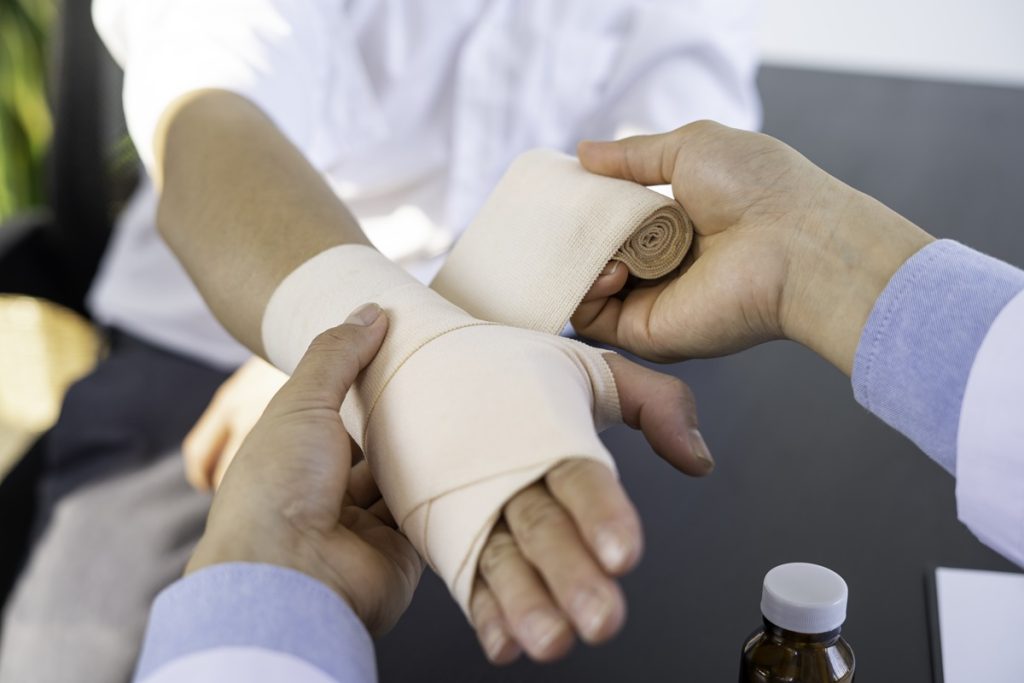
From bumps and bruises to life-changing amputations, personal injury accidents can cause a wide range of injuries. While you might assume that soft tissue injuries are relatively low cost, the truth is that these types of injuries can have serious negative effects on a person’s life.
If you’re a personal injury attorney with a case involving soft tissue injuries, keep reading to learn more about how to determine fair and full compensation for such an injury.
What Are Soft Tissue Injuries?
Before you can learn about getting compensation for soft tissue injuries, it’s important to establish what qualifies as a soft tissue injury. A soft tissue injury is a damage sustained to the muscles, tendons, or ligaments. Some common types of soft tissue injuries include:
- Sprains – Ligaments are bands of tissue that help stabilize your bones, and these ligaments can be injured if they’re stretched beyond a normal range of motion.
- Strains – There are tendons or bands of tissue connecting your muscles to your bones, and these bands can be injured by force or overextension.
- Tendonitis – Your tendons can become painfully inflamed, often because of a harsh movement of the muscle.
- Bruising – Bruises, also known as contusions, are a painful discoloration of the soft tissue caused by a fall or blow.
- Bursitis – There are tiny fluid-filled sacs helping to smooth the motion of your knee joint, and these sacs can become inflamed due to an injury.
What Is the Typical Treatment Timeline for Soft Tissue Injuries?
Of course, to calculate how much an injury may cost, you will need to know about the expected treatment needed for such an injury.
Often, we think of soft tissue injuries as being able to heal on their own, however, the treatment for these types of injuries will vary depending on the severity, type, and location of the injury. In general, at-home treatment involves rest, cold compresses, and elevation. Medical treatment for soft tissue injuries may include:
- Physical Therapy – Soft tissue injuries can impact our physical abilities, but physical therapy can help you get it back.
- Bracing or Splinting – Sometimes, a brace or splint may be used to stabilize the area and prevent further injury.
- Medication – A physician may prescribe pain medications and anti-inflammatory medications to help treat soft tissue damage.
- Pain Management – If the injured party develops chronic pain due to their injury, they may need long-term medical care to address that discomfort.
- Psychological Treatment – Both the accidents that cause soft tissue injuries and the effects of such injuries can be traumatic. Psychological care may be needed to recover.
Keep in mind that each soft tissue injury is different, and the injury in your case may require additional treatments not listed above. To get an idea of what treatment may be needed in your case, you should consult with a Certified Life Care Planner.
How Can Soft Tissue Injuries Affect an Injured Person’s Quality of Life?
In addition to the medical costs of soft tissue injuries, this type of bodily harm can also lead to a range of other negative impacts, and you will need to take each of these potential impacts into account when calculating full compensation:
- Chronic Pain – Soft tissue damage can cause serious ongoing pain that can seriously impact a person’s ability to live and enjoy life.
- Lost Income – Those with soft tissue injuries often have to take time off work to heal.
- Lifestyle Changes – After a soft tissue injury, the injured person may need to change their lifestyle to allow for healing and prevent future injury.
- Psychological Impact – The symptoms and consequences of soft tissue injuries can cause negative psychological impacts such as stress and frustration.
- Reduced Mobility – While the injury heals and potentially sometime after, the injured person’s mobility may be limited.
Keep in mind that not all of the costs listed above will be included in a medical cost assessment. To learn exactly what types of expenses are covered in a Medical Cost Projection report or Life Care Plan, you can talk to a Certified Life Care Planner.
Calculating Medical Costs for Soft Tissue Injuries
Now that you know what types of expenses may be caused by a soft tissue injury, you can learn about how a medical cost assessment is conducted in case of this type of injury. In cases involving soft tissue injuries, we follow the process below to calculate future care costs:
- Medical Records Review – The first step to calculating future care costs is establishing the patient’s current condition and treatment.
- Medical Research – After we know the patient’s current condition, we can begin researching the care needed for such an injury. This may include interviews with healthcare providers and the injured party.
- Thorough Documentation – Throughout the assessment process, we maintain careful documentation to substantiate our findings.
- Expense Calculations – Utilizing all the information we’ve gathered, we calculate the total medical cost of the injury in question.
- Report Preparation – Finally, we create an airtight, accurate report that can stand up to any scrutiny.
The process for creating a Life Care Plan is slightly different from the process used to prepare a Medical Cost Projection. You can consult with an experienced medical cost consultant to determine which you need for your case.
Get a Top-Quality Medical Projection Report from DM Medical Cost Consulting
As you can see, calculating medical costs for even the most minor of injuries can be complex and difficult. Without a Certified Life Care Planner by your side, you can be opening your client up to an excessive settlement or undervalued claim. A Certified Life Care Planner can ensure that your client’s best interests are protected.
If you have a personal injury case with medical damages, you need a medical cost assessment to ensure the best possible outcome for your case. Get in touch with the Certified Life Care Planners at DM Medical Cost Consulting to learn more about how we can help you.